


Written by Dave Stewart
Zehr Insurance Brokers Ltd.
A farm is more than just land, equipment, and livestock, it’s a legacy built through generations of hard work and dedication. But without a clear plan, that legacy can be lost in a moment. Succession planning isn’t just something to think about when retirement nears, it’s about ensuring the farms stays in the family and continues to thrive for years to come.
Why Does Succession Planning Matter?
Many family farms in Canada are multi-generational, but smooth transitions don’t happen automatically. Without a solid plan in place, families can face difficult and emotional challenges that affect both relationships and the future of the operation. Succession planning helps:
- Prevent family conflict or legal issues by setting clear expectations early
- Create a roadmap for ownership, management, and financial
- Protect your family’s legacy and maintain stability through life’s inevitable
- Keep the operation running smoothly through retirement, unexpected illness, or sudden
- It’s not just about who inherits the land, it’s about ensuring the knowledge, skills and values that built the farm are passed on too.
What Challenges Do Families Face Without a Plan?
When succession planning is put off, families often face confusion and stress at the worst possible time. Common challenges include:
- Unclear roles or decision-making authority, leading to disputes or
- Confusion over inheritance, who receives what, from land and equipment to debts and
- Tax burdens or legal complications due to poor
- Emotional strain on family members, especially after a loss or major life
- Young farmers being unprepared to take on leadership or financial
These situations can be avoided with early, honest planning and clear communication.
What Should a Good Farm Succession Plan Include?
A strong plan considers every aspect of the operation, from leadership to finances to communication.
What to focus on
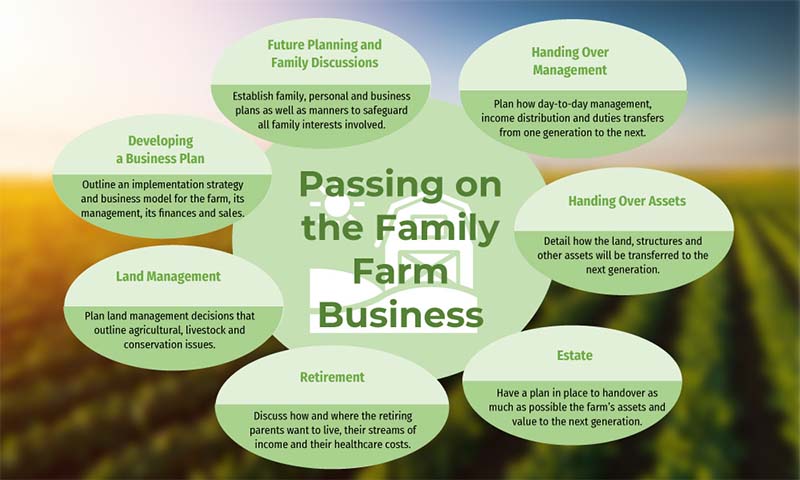
- Clear Identification of Future Leadership: Decide who will take over management and These roles aren’t always the same person, so it’s important to clearly define responsibilities and decision-making authority.
- Legal and Financial Planning: Update wills, trusts and ownership documents regularly. Consult an attorney and financial advisor who specialize in agriculture to ensure the transition is structured to minimize taxes and protect assets.
- Timeline and Transition Strategy: Will the transition happen gradually, or is there a plan in place for emergencies? A detailed timeline gives everyone clarity and helps younger generations gain experience before taking full control.
- Training and Mentorship: Provide opportunities for the next generation to learn leadership, management, and technical The best transitions happen when knowledge is passed down steadily over time.
- Communication with the Family: Have open, ongoing conversations about goals, expectations, and Revisit the plan annually to make updates as circumstances change, marriages, new children, or financial adjustments can all impact the future of the farm.
Emergency Transition Information Checklist
Another valuable component of a well-prepared succession plan is establishing an Emergency Transition Information Checklist. This is a secure, organized file containing essential information required to keep the farm running in the event of a sudden loss.
It should include bank accounts, investment accounts, life insurance policies, property deeds, and any necessary passwords or access credentials. Ensuring that the right individuals know where to find this information can make the difference between maintaining daily operations with minimal disruption and scrambling to manage bills, assets, or decisions during an already challenging time.
What Are the First Steps Toward Succession Planning?
- Starting is often the hardest Here’s how to begin:
- Start the conversation daily, don’t wait for a crisis or
- Take inventory of assets and liabilities, including land, equipment, savings, and
- Involve everyone affected, spouses, children, and business partners should all have a
- Consult professionals like legal, tax, and financial advisors who understand agricultural
- Document everything and commit to reviewing it annually to keep it up to
The earlier you begin. The more flexibility you have to plan transitions gradually and fairly.

Conclusion:
The best gift you can give your family isn’t more acres, it’s a clear plan for what happens next. Succession planning can be emotional and complex, but it’s one of the most valuable investments you can make in your family’s future. By taking the time to discuss goals, involve the right people, and document your plan, you can ensure your farm continues to grow and thrive for generations to come. Don’t just plan for next season, plan for the next generation.
Call Zehr Insurance brokers and see if we can help you with your insurance needs.