
Written by Richard Zehr
BBA, CAIB, President, Zehr Insurance
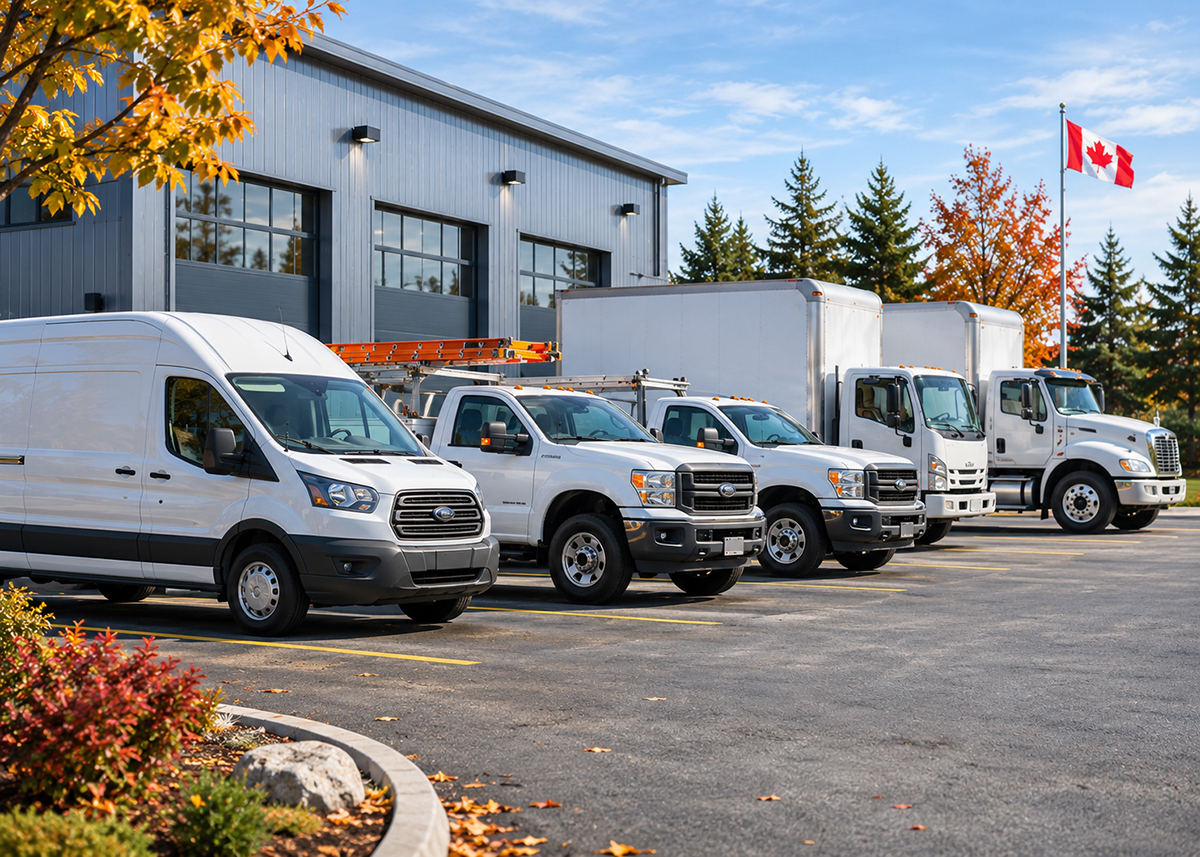
Fleet insurance differs from standard individually rated commercial auto (IRCA) based on more vehicles. The formal term is power units, as trailers would not be considered eligible in terms of the number of units to qualify for a fleet policy.
Fleet insurance eligibility ranges between insurers, commonly between 5 or 10 power units within the business would be eligible for fleet rating.
This guide covers four things every business owner with company vehicles should understand: how fleets are rated, practical ways to lower your cost, how GPS and telematics can give you an edge with both customers and insurers, and what Ontario’s July 1, 2026 accident benefits reform means for your business and your drivers.
How fleet insurance is rated
A fleet is rated on two layers. Each vehicle carries a base rate built from its own characteristics, and the fleet is then adjusted up or down based on its experience, its drivers and how well it is managed. Smaller fleets lean more heavily on the vehicle-level rates. Larger fleets increasingly earn a premium shaped by their own loss record.
| Rating factor | What the insurer looks at | Why it matters |
|---|---|---|
| Vehicle type and value | Make, model, gross vehicle weight, body type, replacement cost, upfitting and equipment | Heavier vehicles cause more severe damage; higher values mean costlier physical damage claims |
| Vehicle use | Service, delivery, hauling, passengers, contractor work, sales | Delivery and frequent-stop operations generate more claims than occasional service calls |
| Radius of operation | Local, intermediate or long-haul; cross-border travel | More kilometers and unfamiliar roads mean more exposure |
| Garaging territory | Where vehicles are parked overnight and where they mostly operate | Urban congestion, theft rates and repair costs differ by region |
| Drivers | License class and years licensed, abstracts (MVRs), convictions, at-fault history, age | Driver quality is the single strongest predictor of future losses |
| Loss history | Typically 3 to 5 years of claims: frequency, severity, at-fault ratio, open reserves | The fleet’s own record is the best evidence of how it will perform |
| Coverages, limits and deductibles | Liability limit, collision and comprehensive, accident benefits options, deductible levels | Higher limits cost more; higher deductibles shift small losses back to you |
| Fleet size and composition | Number of units, mix of light and heavy vehicles, trailers, hired and non-owned exposure | Larger fleets get experience-based pricing and spread risk across more units |
| Operations and safety program | Hiring standards, driver training, maintenance records, CVOR rating, telematics, written policies | Underwriters credit fleets that can prove they manage risk |
Operations and safety programs in place are where business owners have the most influence over their fleet rating. Two fleets with identical trucks in the same town can pay very different premiums because one documents a real safety culture and the other does not.
Steps to reduce your insurance costs
The biggest savings come from preventing claims, not from shopping the price. Insurers reward fleets that can prove control over who drives, how they drive and how vehicles are maintained.
- Hire carefully and check abstracts every year. Set written driver standards: minimum years licensed, a cap on convictions, no serious offences. Pull a driver abstract before hiring and at least once a year after.
- Put a written fleet safety policy in place. Cover seatbelts, distracted driving, personal use of company vehicles, who may drive, and how collisions are reported. Have each driver sign it.
- Train drivers and keep records. Defensive driving, backing and parking, and load securement courses reduce the most common fleet claims. Proof of completion helps at renewal.
- Maintain vehicles on a schedule. Brake, tire and lighting failures lead to avoidable collisions. Maintenance logs also strengthen your position when a claim is disputed.
- Match vehicles to the job. A lighter or right-sized vehicle often rates lower than an oversized one doing the same work.
- Review deductibles against your cash flow. A higher collision or comprehensive deductible lowers premium. It makes sense when your business can comfortably absorb small losses.
- Keep your vehicle schedule accurate. Remove sold or retired units promptly and confirm garaging locations, radius and use are current. Overstated exposure costs money; understated exposure creates claim problems.
- Report claims quickly and manage small ones well. Fast reporting controls costs on injury claims. Tracking your own near-misses and minor incidents shows where training is needed.
- Manage your CVOR record. Commercial vehicles over 4,500 kg need a CVOR certificate, and underwriters review your safety rating and violation history.
- Bring your broker into the conversation early. A complete submission with safety documents, telematics reports and a loss-control plan, sent 60 to 90 days before renewal, gives the broker the material needed to negotiate.
GPS monitoring: a competitive advantage that also lowers risk
GPS and telematics turn your fleet from a guess into a measured operation. The same data that improves dispatching and customer service also shows insurers exactly how your vehicles are driven.
Business advantages
- Faster, more reliable service. Live locations let you send the closest vehicle, give customers accurate arrival times and prove when a job was attended.
- Lower operating costs. Route optimization and idle-time reports cut fuel spending. Engine diagnostics flag maintenance needs before a breakdown.
- Stronger bids and contracts. Large customers and general contractors increasingly ask suppliers about safety programs. Documented driver scoring sets you apart.
- Reports on speeding, hard braking, after-hours use and unauthorized trips help you coach drivers fairly and consistently.
- Theft recovery. A tracked vehicle is recovered faster and more often, which also limits business interruption.
How it affects your insurance
Insurers are moving from rating fleets on past claims alone to rating them on how they actually drive today. Some carriers now offer dedicated fleet telematics programs which works with a fleet’s existing provider and offers premium credits to fleets whose risk score beats the average.
Telematics also helps when a claim happens. Location, speed and time-stamped data can confirm your driver’s account of a collision, defend against exaggerated injury or damage claims, and support faster settlement. Dash cameras add video evidence, which is especially valuable in disputed liability claims.

Ontario’s 2026 accident benefits reform: what business owners should consider
Since July 1, 2026, most accident benefits in Ontario auto policies have been optional, and the change applies to commercial and fleet policies as well as personal ones. For employers, the key question is whether the people who drive your vehicles still have the protection you assume they have.
What changed
| Area | Before July 1, 2026 | Now |
|---|---|---|
| Standard benefits | A full package of statutory accident benefits on every policy | Medical, rehabilitation and attendant care stay mandatory, with standard limits unchanged |
| Optional benefits | Included automatically | Income replacement, non-earner, caregiver, housekeeping and home maintenance, death and funeral, dependent care, lost educational expenses, visitor expenses, damage to personal items and indexation must be chosen |
| Who the optional benefits cover | Broadly anyone injured as an occupant or pedestrian | The named insured, spouse, dependents and drivers listed on the policy |
| Who pays first for treatment | Employer group health plans often paid first | The auto insurer pays first for medical and rehabilitation costs, except medication |
| Renewals | Not applicable | Existing benefits carry over unless you opt out in writing on the new OPCF 47R form |
| New policies | Not applicable | Only the mandatory benefits apply unless optional benefits are selected |
What this means for your business
- Employees may not be covered automatically. On a commercial policy the named insured is usually the company. Employees who drive company vehicles may not qualify for optional benefits unless they are listed as drivers or covered elsewhere.
- Your benefits plan becomes part of your auto program. The reform assumes many workers already have disability and health coverage through their employer. Part-time, seasonal, contract and temporary drivers often do not, and they carry the most exposure.
- WSIB does not close every gap. Injuries on the job generally fall under WSIB for covered workers. Owners, executives who have not purchased optional WSIB coverage, independent contractors and staff driving outside work hours may depend on auto accident benefits instead.
- The savings from dropping coverage are usually small. Premium reduction tends to be modest, while the cost of an uncovered serious injury can be significant. Income replacement, caregiver and non-earner benefits deserve the closest look.
- Decisions need to be documented. Legal commentators expect disputes over declined benefits and the advice given about them. A written record of what was offered, what you chose and why protects both you and your drivers.
- Your workplace documents need to match. Driver handbooks, fleet policies and employment agreements should state clearly what accident benefits coverage drivers have, so no one learns about a gap after a collision.
Many business owners do not realize that fleet rating can offer significant premium savings when paired with a best-in-class safety culture. If your business operates five or more power units, Zehr Insurance works with companies who can offer a fleet policy at that size. For more information regarding fleet insurance call our office at 519-662-1710 or stop in to speak with one of our commercial insurance brokers.
Call Zehr Insurance brokers and see if we can help you with your insurance needs.